
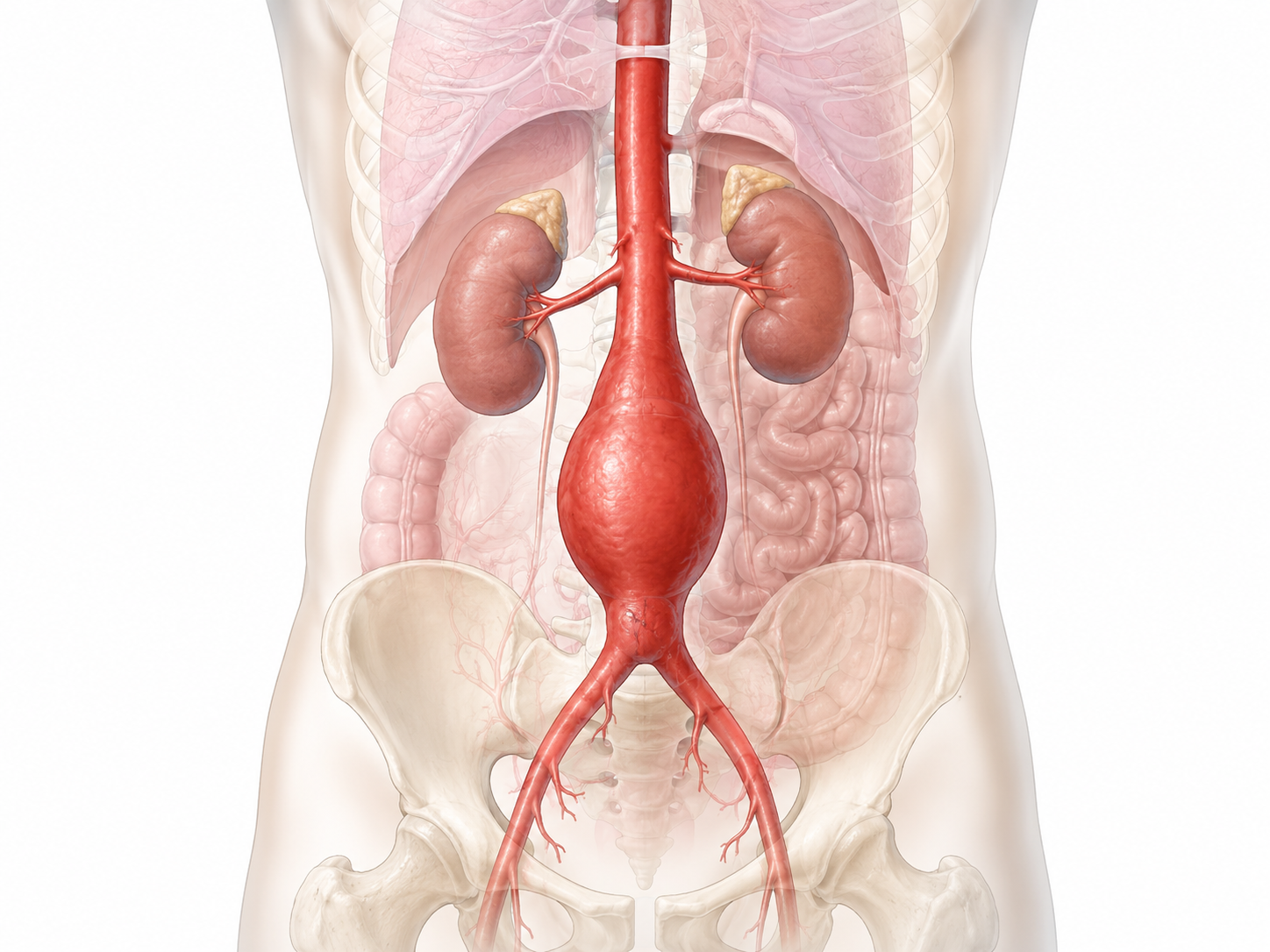
Abdominal aortic aneurysm
An abdominal aortic aneurysm (AAA) is a bulge or ballooning that develops in the aorta, the main artery responsible for carrying blood from the heart to the lower part of the body. Specifically, this swelling occurs in the section of the aorta located in the abdomen (belly area). While most AAAs are small and do not cause problems, they can become dangerous because there is a serious risk that they might tear or burst (rupture).
Symptoms
Many people with an abdominal aortic aneurysm do not experience any noticeable symptoms. Often, the condition is discovered by chance during a medical screening test or when a doctor is performing tests for another health issue.
However, if the aneurysm grows larger, some individuals might begin to notice:
• Pain in the abdomen (tummy) or back
• A feeling of pulsation or throbbing in the tummy
Red flags
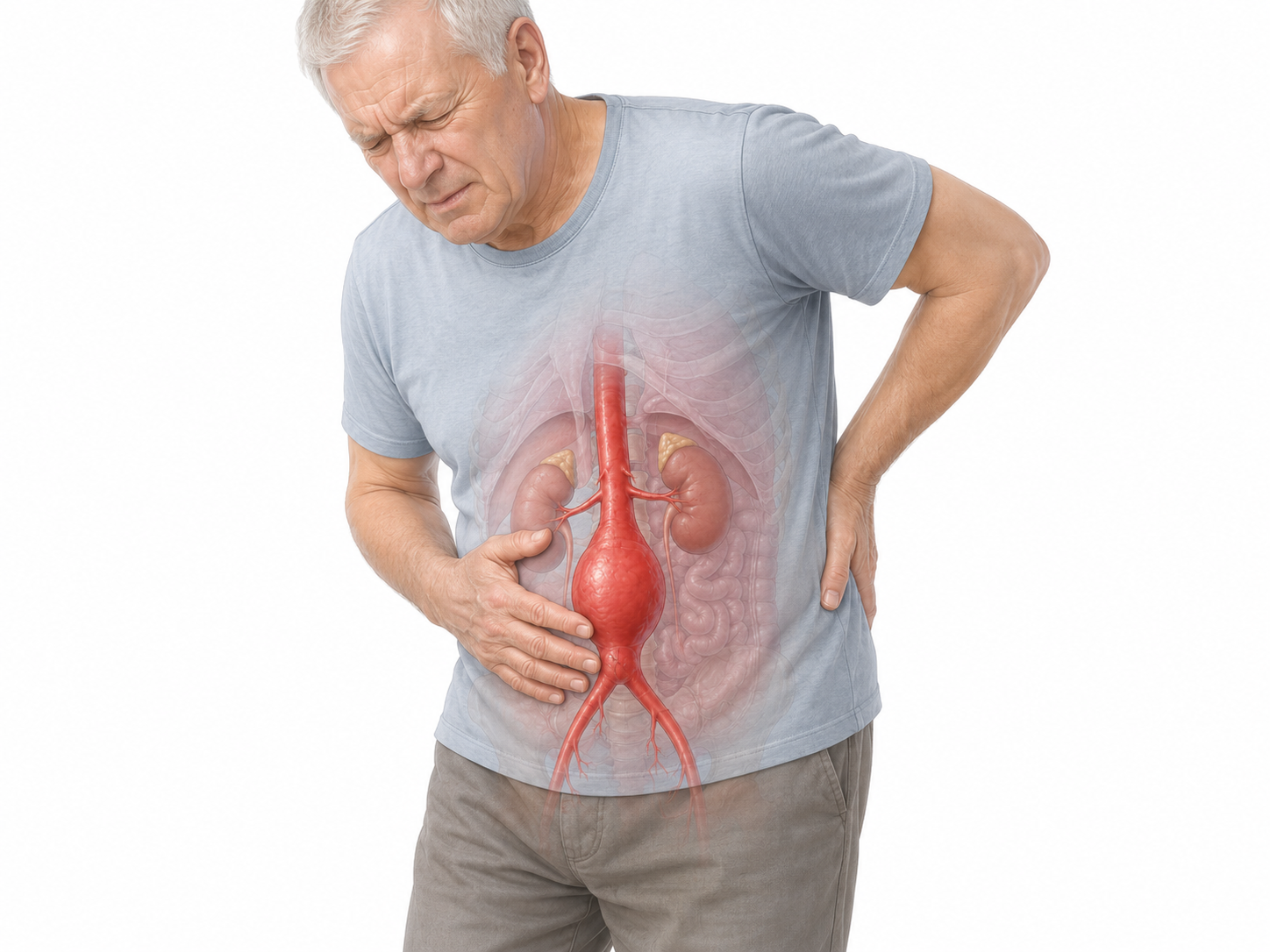
Consult a doctor or health worker if you experience:
• Pain in your abdomen or back that does not go away or keeps returning.
• Feeling a lump or mass in your abdomen.
These symptoms can be caused by many different things and do not automatically mean you have an abdominal aortic aneurysm. However, it is always best to have them checked by a healthcare professional.
Seek immediate emergency medical help if you or someone else shows any of these serious warning signs:
• Sudden, very severe pain in your abdomen or back.
• Struggling to breathe or having stopped breathing.
• Skin that looks unusually pale or grey (on brown or black skin, this change might be easier to see on the palms of the hands or soles of the feet).
• Loss of consciousness.
These critical signs could mean that an abdominal aortic aneurysm has burst (ruptured). This is a life-threatening medical emergency that needs urgent treatment in a hospital as quickly as possible.
Self-care
If you have been diagnosed with an abdominal aortic aneurysm, taking these important steps can help you look after your health:
• Always follow the advice given by your doctor or healthcare team. This includes consistently taking any prescribed medicines, especially for conditions like high blood pressure or high cholesterol. Managing these conditions well can significantly help prevent the aneurysm from growing larger.
• If you currently smoke, it is crucial to quit. Smoking is a major risk factor and can cause the aneurysm to grow more quickly and dangerously.
• Maintain a healthy, balanced diet and try to stay physically active. It is important to discuss with your doctor what level of physical activity is safe and appropriate for your specific condition.
• Attend all your scheduled follow-up appointments and imaging scans. These regular checks are vital for your medical team to monitor the aneurysm's size and detect any changes or growth over time.
• Be aware of the symptoms that indicate you need urgent medical attention. These warning signs are described in detail in the "Immediate Action Required" section of this article.
Treatment
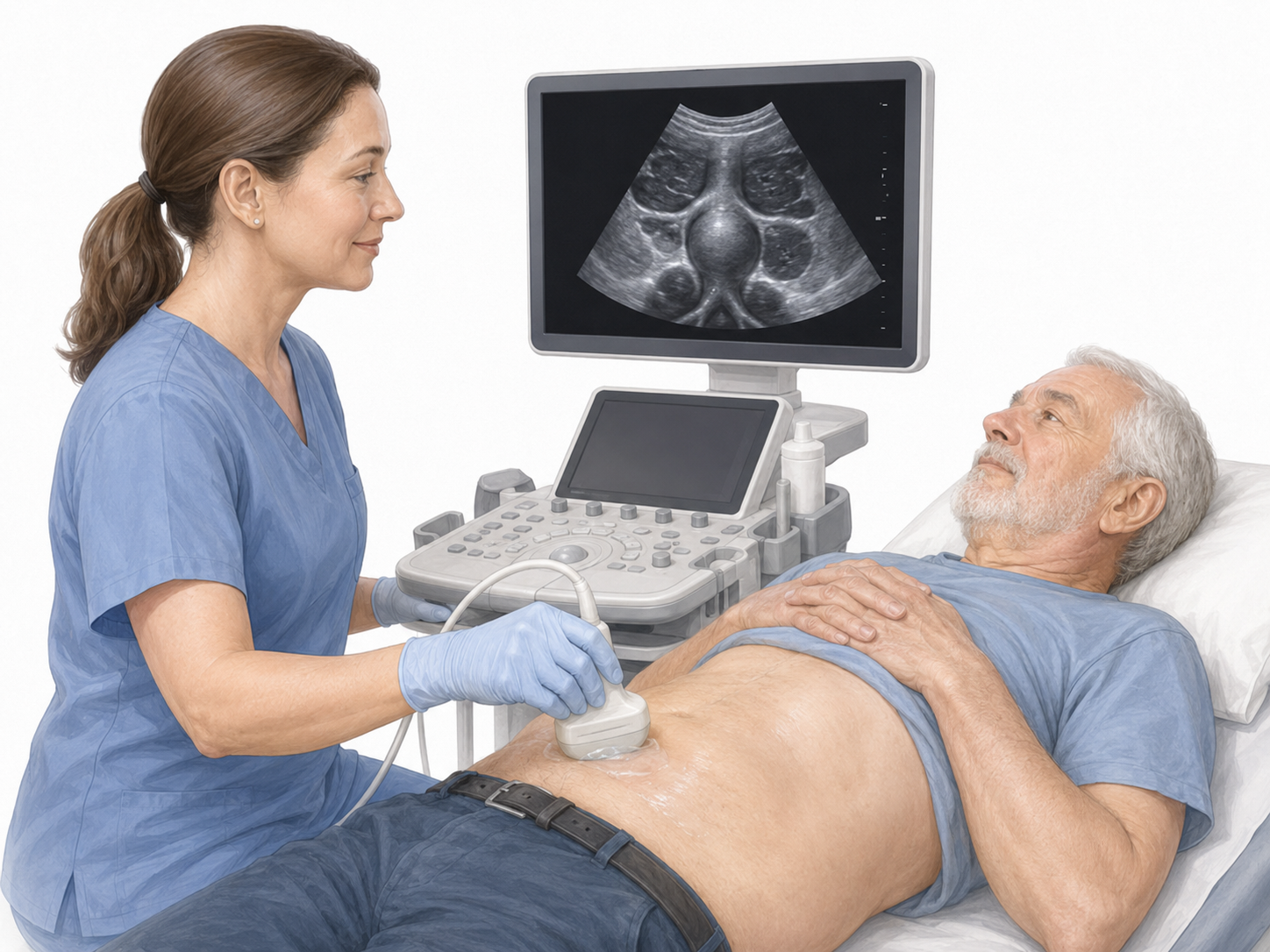
Treatment for an abdominal aortic aneurysm depends on its size and whether you are experiencing symptoms.
For smaller aneurysms (typically below 4.5cm), management focuses on preventing growth. This often involves lifestyle changes, such as quitting smoking and maintaining a healthy diet. You may also be prescribed medicines to help lower blood pressure and cholesterol. Regular scans are essential to monitor the aneurysm's size, as they often enlarge over time.
Surgery is considered for larger aneurysms (usually 5.5cm or more), those that are growing rapidly, or if you experience pain. The purpose of surgery is to reduce the critical risk of the aneurysm rupturing. Your doctor or surgeon will explain the benefits, risks, and side effects of surgery in detail.
In the event of an aneurysm rupture, emergency surgery is immediately required.
Questions to ask your doctor
• How large is my aneurysm, and what does this size tell us about my overall health?
• What is the likelihood of my aneurysm growing bigger or potentially bursting?
• What symptoms should I watch for that might signal my aneurysm is worsening, and when should I seek urgent medical help?
• Are there any lifestyle adjustments or medicines that can help manage my aneurysm?
• How frequently will I need check-ups or imaging tests to monitor the aneurysm?
• What are the various treatment choices available for my aneurysm, and what are the advantages and potential risks associated with each option?
• Are there specific activities or exercises I should avoid to protect my health?
Nepal pathway
For symptoms that are not urgent, it is best to consult a doctor at your local clinic, health post, or a hospital. If, however, your symptoms become severe, worsen, or cause you significant worry, you must go to the nearest hospital's emergency department immediately. If an ambulance or other emergency transport is available in your area, please contact them for prompt assistance.
Disclaimer
This is general health information only and does not replace medical advice, diagnosis, treatment, or emergency care.